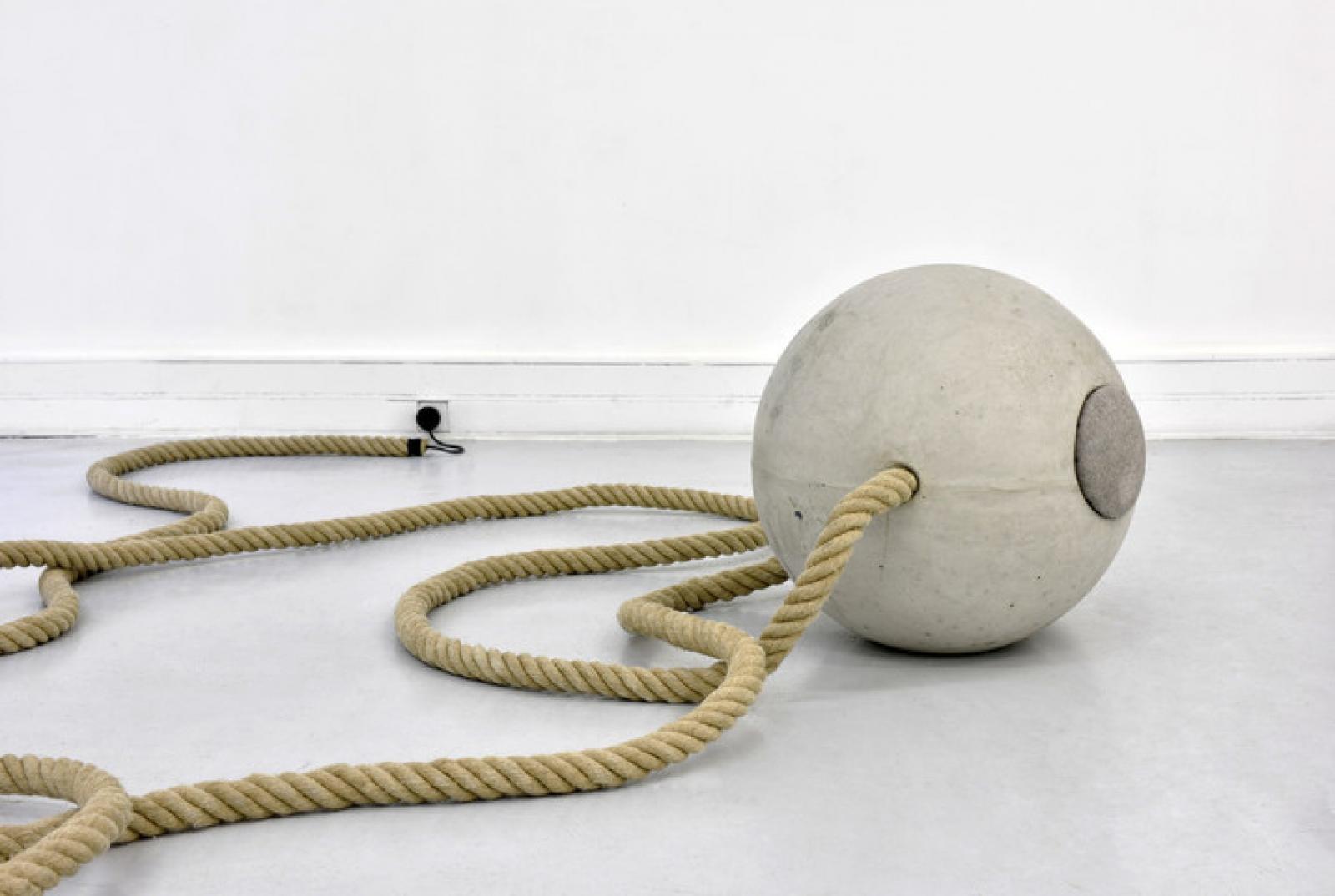
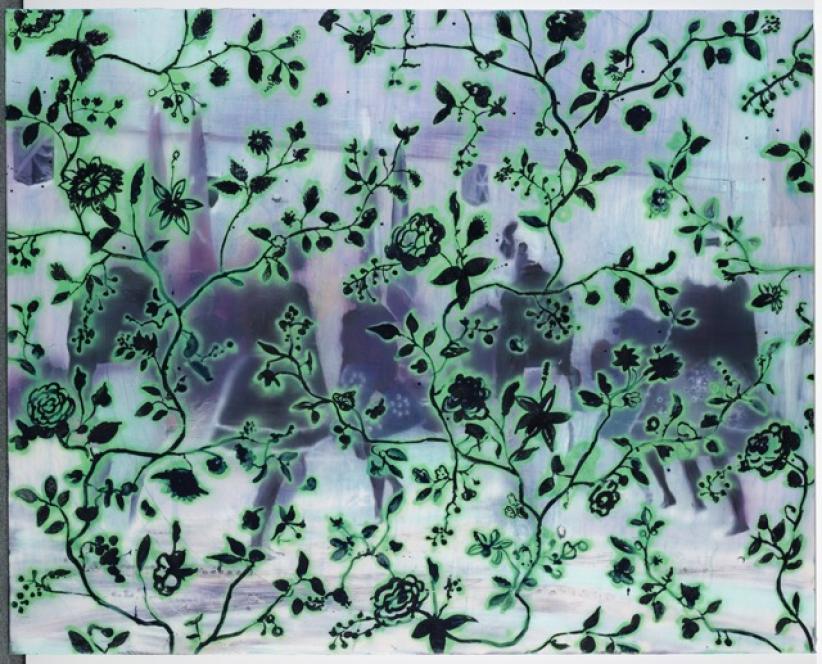
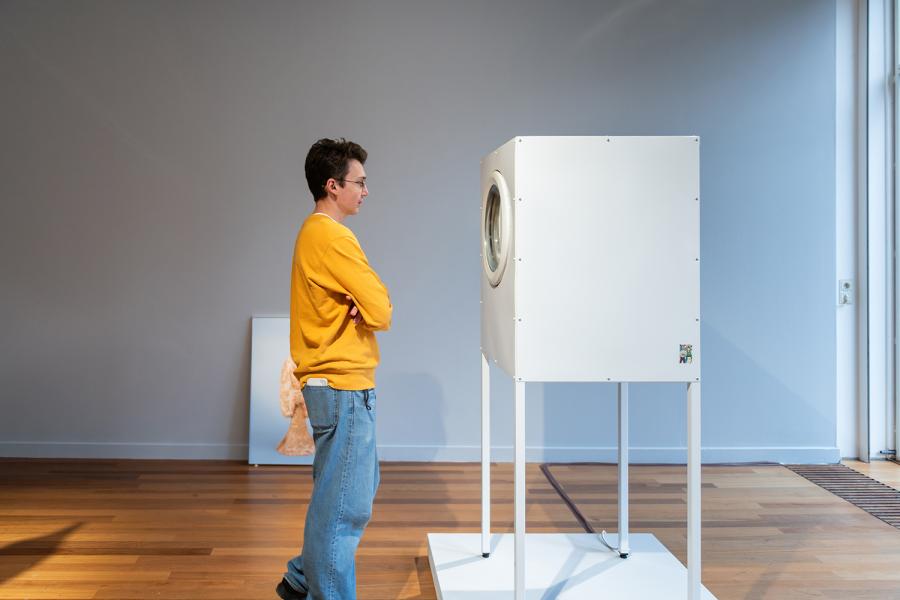
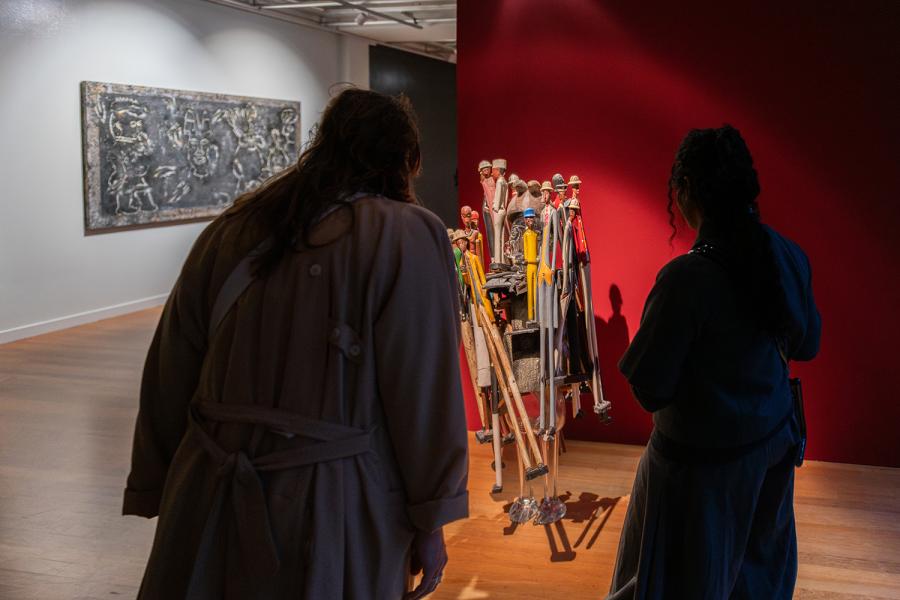
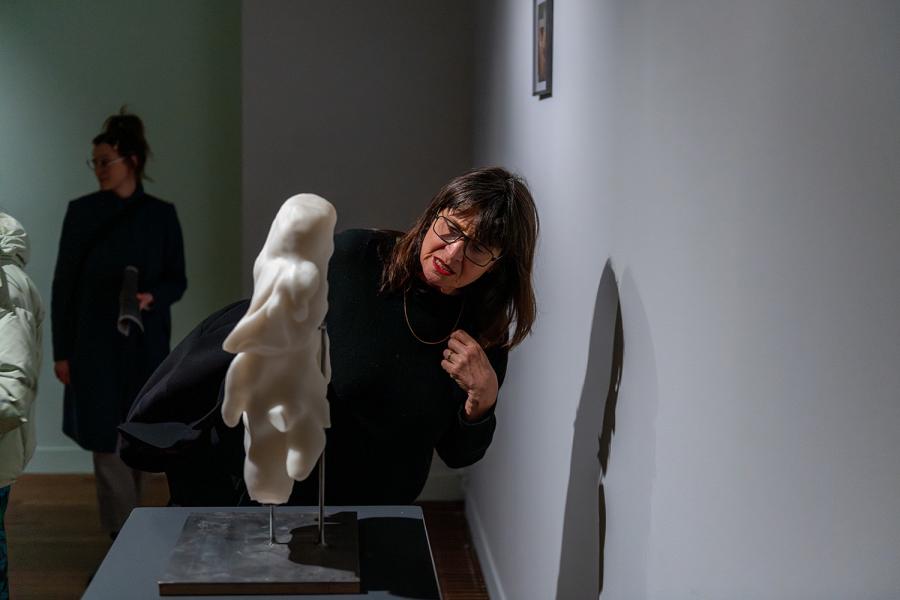
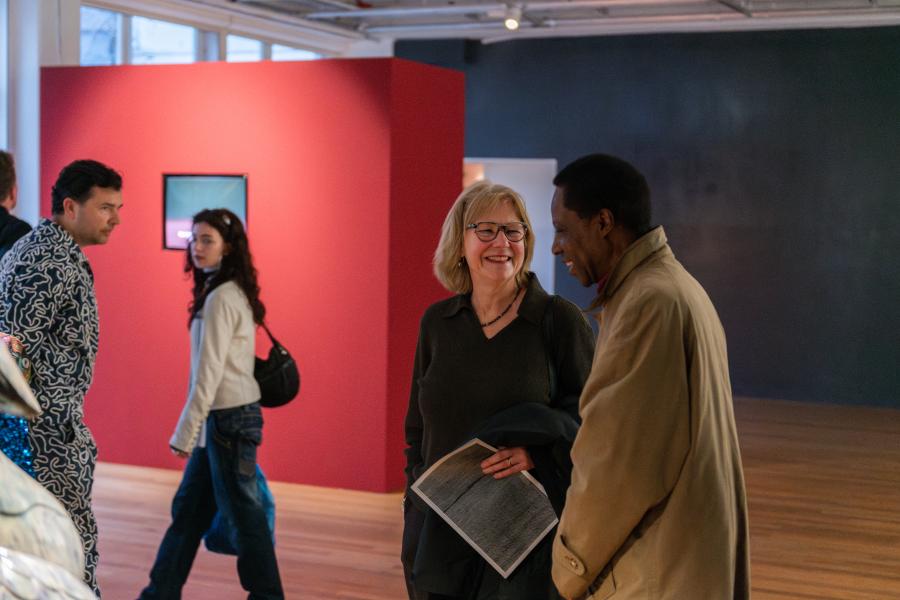
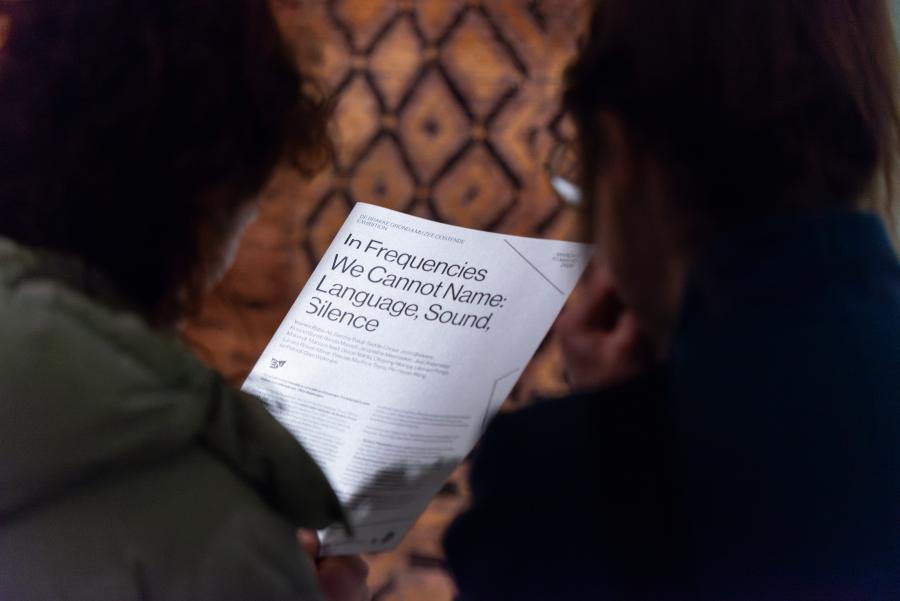
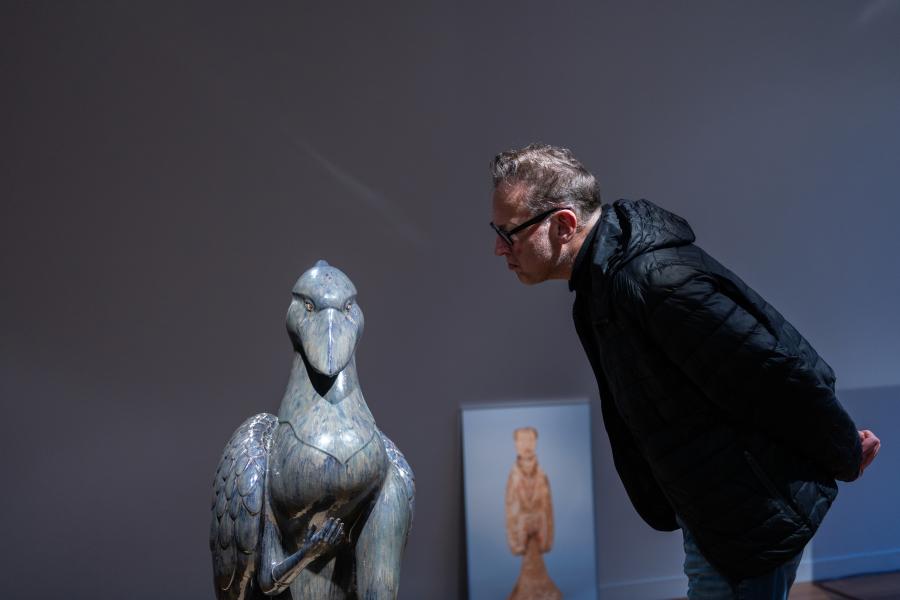
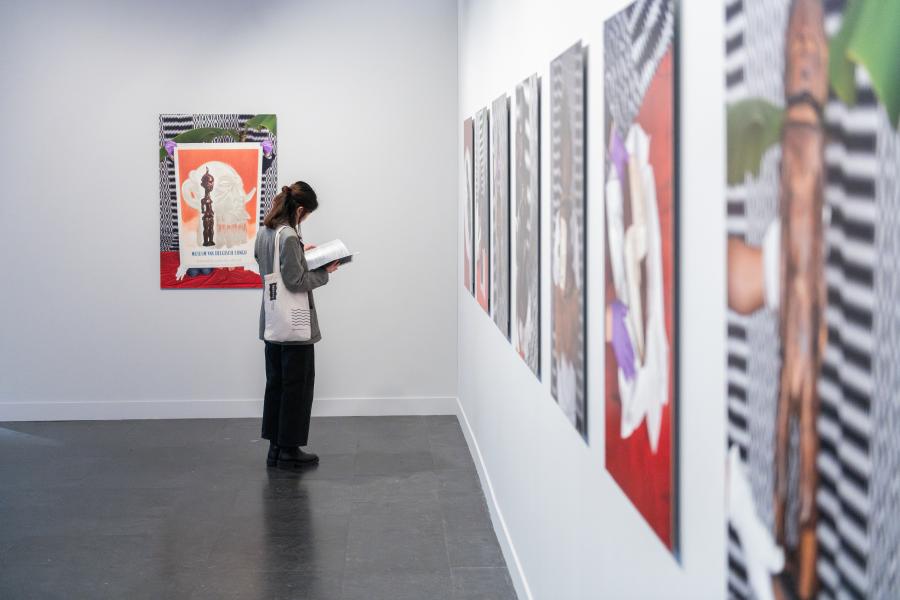
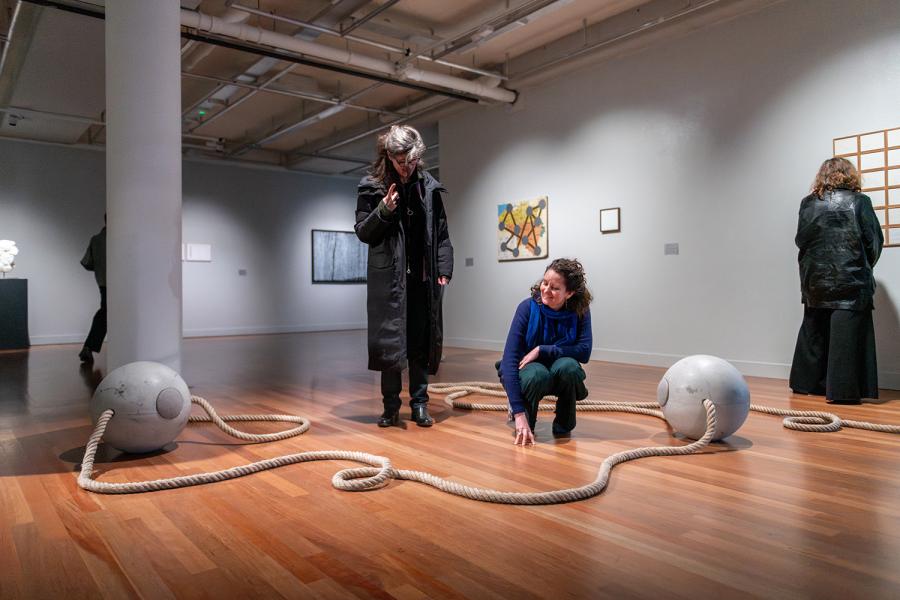
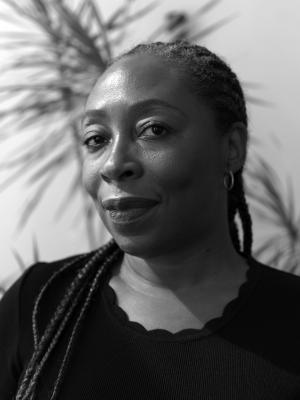
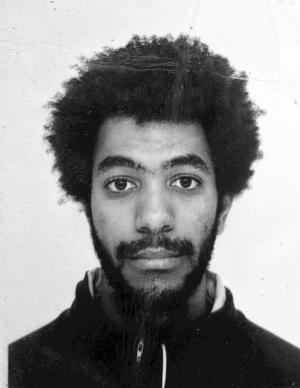
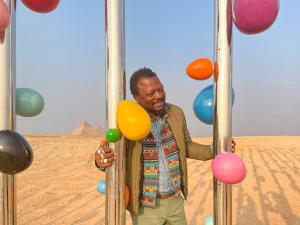
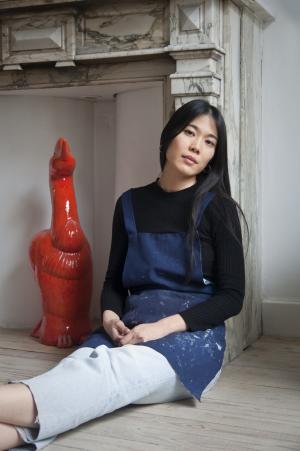
This year, De Brakke Grond is taking a new step in its collaboration with Mu.ZEE, the museum for modern and contemporary Belgian art in Ostend. Parallel to the renovation of Mu.ZEE, this collaboration will run for three years and will always start from one central question: what stories can a Belgian museum collection tell in a Dutch, non-museum context? Each year, a different Dutch curator is invited to take a fresh look at the collection and develop an exhibition concept based on their own practice. This second edition, “In Frequencies We Cannot Name: Language, Sound, Silence”, is curated by Rita Ouédraogo and will be on display at de Brakke Grond from March 7 to May 10, 2026. The exhibition will bring together the work of sixteen artists, from established artists such as Otobong Nkanga to up-and-coming talent such as Pei Hsuan-Wang. The exhibition will be activated with a three-part public programme: various artists will be invited to delve deeper into their work and engage in dialogue with the local context during the exhibition period.
In Frequencies We Cannot Name: Language, Sound, Silence
In Frequencies We Cannot Name starts from the idea that language is never neutral: it carries traces of power, colonial history and the limits of translation. This exhibition explores how we experience cultural expression when it is not immediately understandable, and why this lack of understanding can be valuable. The absence of direct legibility is not seen here as a shortcoming, but as a space for encounter and other forms of knowledge.
The curatorial framework of the exhibition builds on the theories of thinkers such as Édouard Glissant and Rizvana Bradley. Glissant's concept of opacity refers to the right to remain opacity and not have to be fully explained or translated. This idea resists colonial ways of seeing and categorising, such as ethnographic documentation and missionary translations, which determined what was recognised as understandable or meaningful — and which continue to influence how cultural “others” are approached today. In line with this, Bradley challenges Western aesthetic norms with her theory of anteaesthetics. Bradley argues that Black and indigenous cultural expressions do not arise within dominant aesthetic systems, but precede them or function outside them. They do not exist as deviations from a norm, but as complete, autonomous systems of meaning with their own logic and integrity.
In Frequencies We Cannot Name invites us to approach these cultural expressions without attempting to translate them into familiar frameworks. Here, opacity is not an obstacle to be overcome, but a conscious position — and a form of cultural self-determination.
Artists
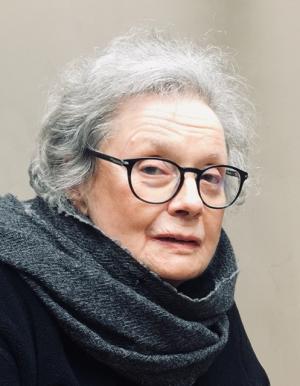
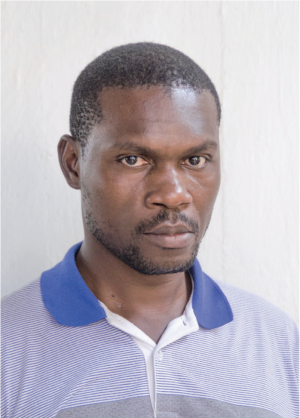
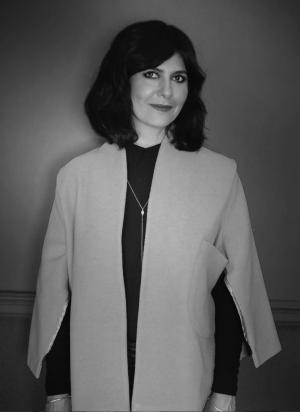
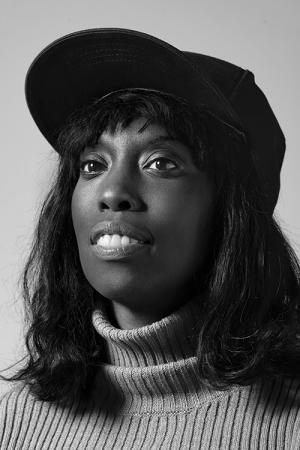
The exhibition features work by Younes Baba-Ali, Sammy Baloji, Saddie Choua, Joris Ghekiere, Roland Gunst, Randa Maroufi, Jacqueline Mesmaeker, Jean Katambayi Mukendi, Maryam Najd, Grace Ndiritu, Otobong Nkanga, Léonard Pongo, Lázara Rosell Albear, Pascale Marthine Tayou, Pei-Hsuan Wang and Patrick Gaël Wokmeni to Amsterdam.
About Rita Ouédraogo
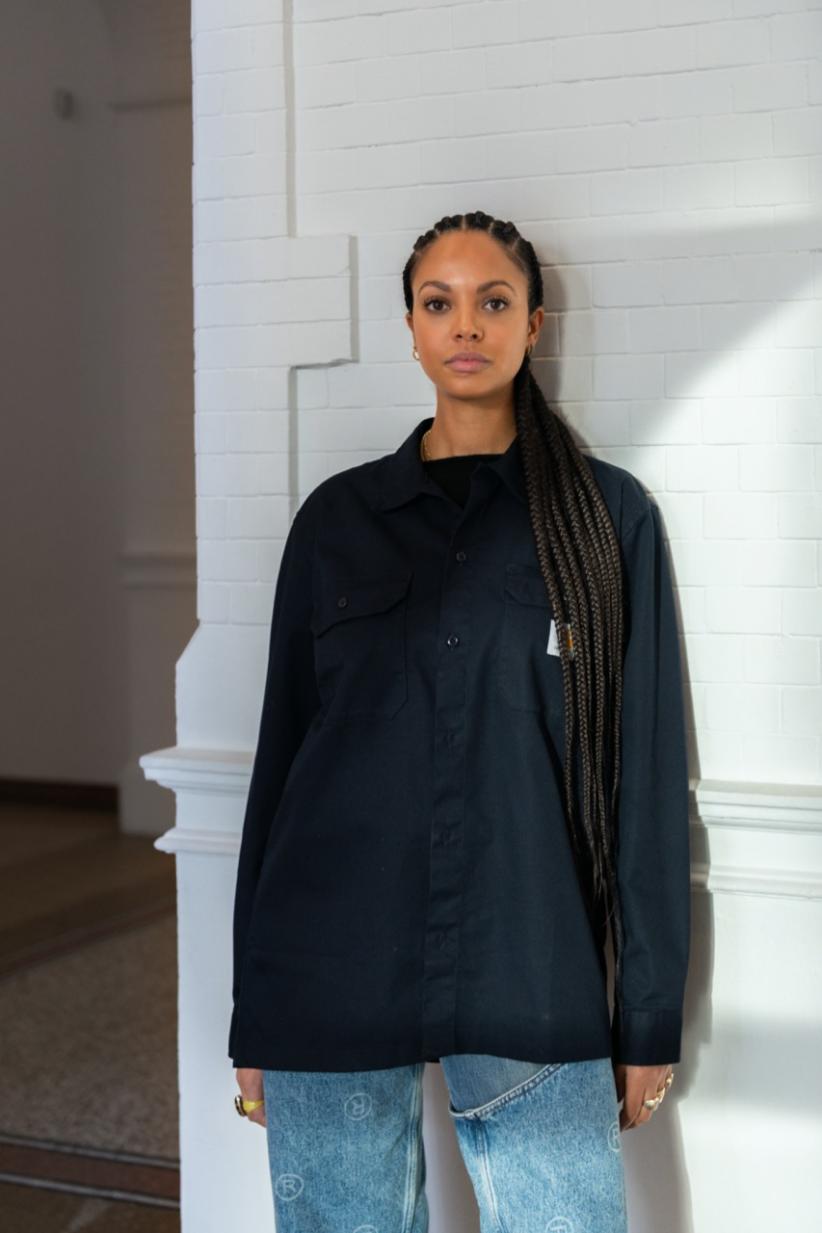
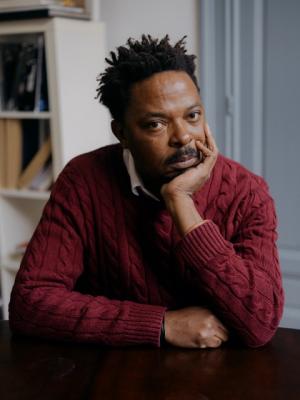
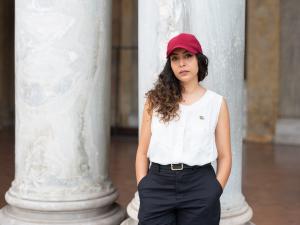
Rita Ouédraogo is involved as external curator of the second edition in this three-part collaboration between Mu.ZEE and de Brakke Grond. In addition to being a curator, Ouédraogo is a researcher and writer with an MSc in Cultural Anthropology and Development Sociology from the University of Amsterdam. Her practice is characterised by experimental and collaborative projects on themes such as archival practices, colonialism, institutional power, counterculture and popular culture, always with a focus on social justice. Her projects and collaborations with people, collectives, initiatives and institutions invite questioning. She has worked on a variety of projects within and outside institutional frameworks, with a particular focus on increasing accessibility to (museum) collections. Her research focuses on forms of collaboration and solidarity within power differences, often within a decolonial framework. Ouédraogo is co-founder and curator of Buro Stedelijk, the project space of the Stedelijk Museum Amsterdam. Previously, she worked at the Research Centre for Material Culture as Research & Community Officer and as curator at Framer Framed. She was co-curator of the Hartwig Art Foundation Special Project (2020–2021). She is also chair of the board of the Mondriaan Fund and of Kanaal40, an online and offline (micro) pop platform.