On International Women’s Day, 8 March, the Language programme focuses on language as a tool for resistance and empowerment. Rather than examining how language can exclude, we shift the perspective to explore the ways in which language can serve as a powerful instrument against patriarchy and social inequality.
Through diverse artistic and critical perspectives, the programme investigates how language can connect, inspire, and transform. It considers how words, narratives, visual language, and performative expressions function not only as means of communication but also as tools for asserting agency, challenging dominant structures, and fostering solidarity.
The afternoon invites participants and audiences to reflect on the potential of language to enact social change, to open dialogues across difference, and to imagine new modes of understanding and collaboration. By highlighting language as both medium and method, the programme positions it at the intersection of art, activism, and collective inquiry.
PROGRAMME:
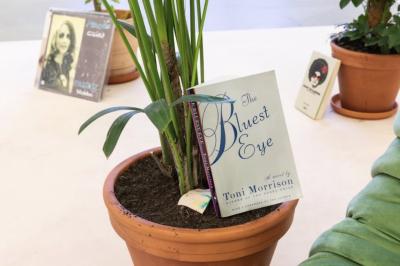
11:00-14:30 | Reading club & lunch with Saddie Choua
Read more here.
15:00-18:00 | Public Programme
15:00 | Lecture by Babeth Fonchie Fotchind
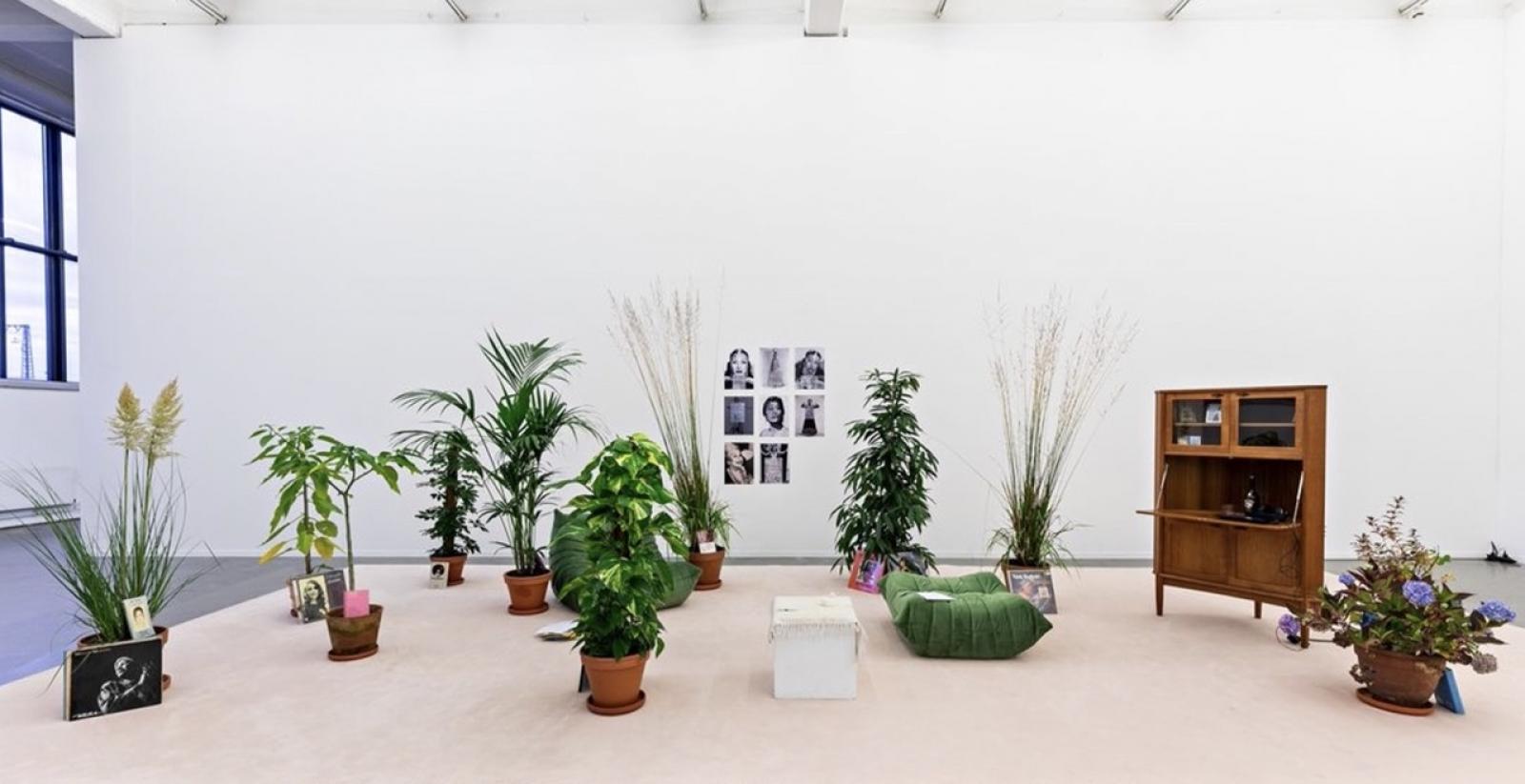
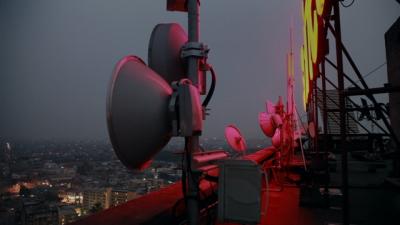
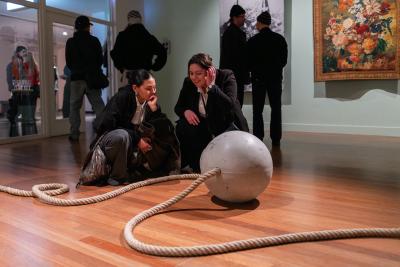
15:15 | Guided tour of the exhibition In Frequencies We Cannot Name, focusing on works that highlight language as an instrument of resistance, and artist talk by artists Maryam Najd and Pei-Hsuan Wang
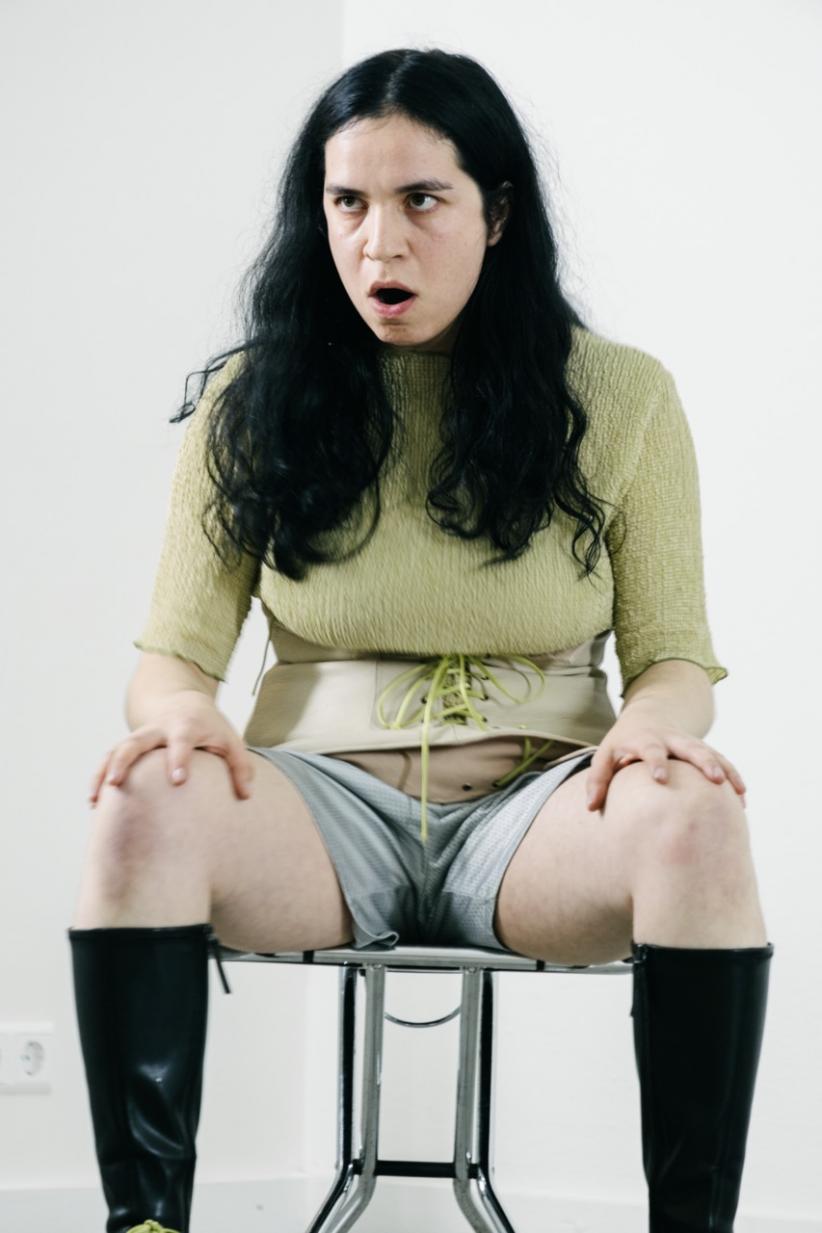
16:00 | Performance GRUNT by Diane Mahín
4:30 p.m. | Panel discussion moderated by curator Rita Ouédraogo, with contributions from Diane Mahín, Pei-Hsuan Wang and Maryam Najd
PERFORMANCE GRUNT BY DIANE MAHÍN
In GRUNT, the audience meets a woman who communicates solely through growling. This growler navigates various moods, portraying what seems to be an urgent story to be told or an intimate conversation to be held. While she attempts to tell a joke, the audience is met with dark growls, turning humor into a shadowy reflection. When she reaches out tenderly, all she can express is violence.
What begins as an awkward encounter full of innocent misunderstandings gradually escalates into a desperate need for connection. As she fails to bridge the communication gap with the audience, her growls become more frantic. She propels them into space, seeking some kind of response. The vocalizations transform from deliberate attempts to communicate into involuntary, visceral outbursts, culminating in a violent expulsion of sound.
Inspired by the extreme vocals of Death Metal, Diane Mahín started growling two years ago. In GRUNT, she uses growling to explore the effects of violence through the visceral language of voice and body. The performance channels a woman’s voice caught between composure and eruption, civility and fury. Within these growls, hidden layers emerge, revealing a raw, direct, and unfiltered expression of inner turmoil.
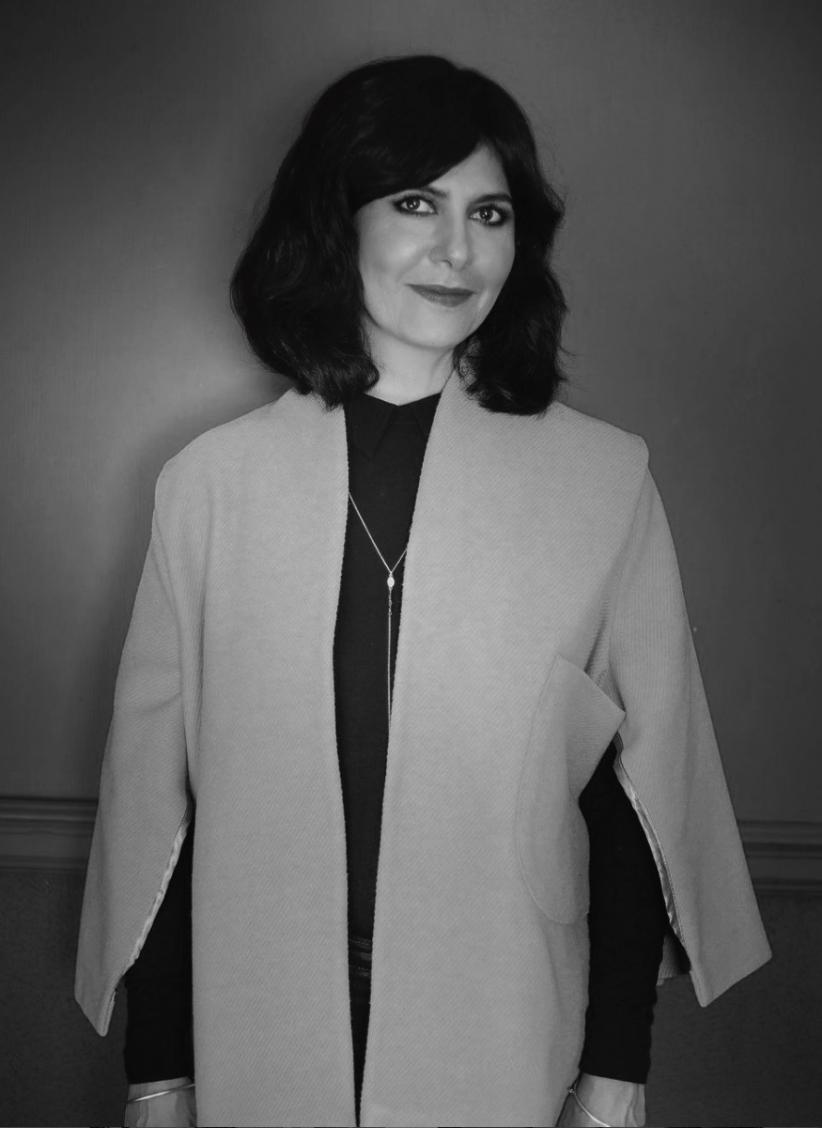
Diane Mahín
Diane Mahín (b. 1993) is a Dutch-Iranian performance maker and sociologist. She makes performative worlds in which sound and image are the driving forces. Diane scrutinizes the human body as a material object in order to dissect social constructions. A single sound from the body can open up an entire world. She follows it, digs in, tears it up, and rebuilds it into theatrical codes shaped by the learned behaviors of an unbearable society. Her work is raw, physical, and drenched in sound. She creates space for the ugliness and darkness of daily life without softening it, sometimes provoking laughter you did not see coming. What first feels strange, disturbing, or taboo often turns out to be deeply familiar.
After her studies at Goldsmiths, University of London and Maastricht Institute of Performative Arts, and Sandberg Institute, her works have been shown in visual arts, theater, and new music contexts such as Museumnacht Amsterdam, Rewire, KIKK (BE), Frascati, Veem House for Performance, FLAM Live Arts Festival, STUK Leuven (BE), XING Bologna (IT), Motel Mozaïque, and instrument inventors initiative. Alongside her individual practice, she makes performances with her brother Manuel Groothuysen under the name FADAT.
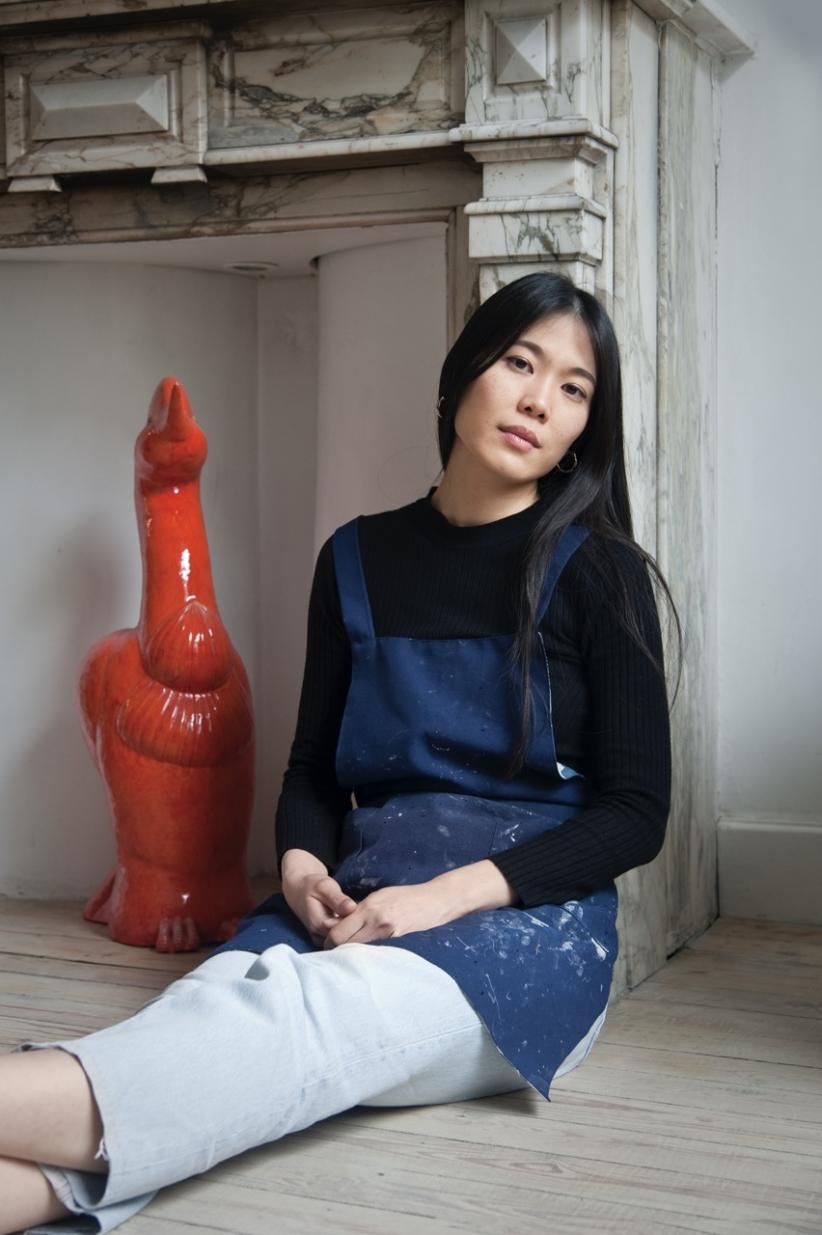
Pei-Hsuan Wang
Pei-Hsuan Wang’s practice traces kinship shaped by migration, memory, and the interplay between personal and canonized histories. Weaving together bio(mytho)graphical narratives, folklore, and cultural artifacts born of Asia-Pacific geopolitics, her work reflects on how meaning is carried and reconstructed across generations. Through sculpture, installation, video, drawing, and public intervention, Wang navigates migratory restlessness, incorporating materials ranging from sancai ceramics and institutionally loaned objects to motorized mechanisms.
Wang has exhibited work at Framer Framed, Amsterdam, NL; the Princessehof National Museum of Ceramics, Leeuwarden, NL; Rhizoma Biennial, MASEREEL, Kasterlee, BE; Kortrijk Triennial, Kortrijk, BE; Beaufort Triennial, Belgian coastline, BE; STUK Leuven, Leuven, BE; Publiek Park, Antwerp, BE; Ballon Rouge Collective, Brussels, BE; Kunsthal Gent, Ghent, BE; Good Weather, Chicago, USA; Taipei Contemporary Art Center, TW.
Maryam Najd
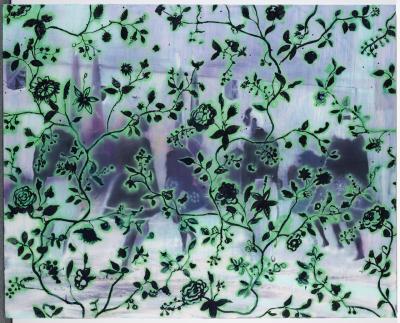
For more than three decades, Iranian-born artist Maryam Najd has lived and worked in Antwerp, developing a practice that engages with social, political, and cultural questions. Her work explores complex realities through visual narratives that invite reflection on power, inequality, and global interconnectedness. Rather than offering fixed conclusions, Najd’s paintings create spaces for dialogue, encouraging viewers to consider multiple perspectives and to reflect on the conditions shaping contemporary life.
A central aspect of Najd’s practice is the exploration of duality through the interplay between abstraction and figuration. Her abstract works focus on colour, form, and structure, organising pictorial space through layered chromatic systems and formal geometric frameworks informed by both Western abstract traditions and Eastern minimalist aesthetics.
In parallel, her figurative works bring together elements of Persian miniature painting with influences from Flemish realist traditions. This synthesis articulates a visual language rooted in historical visual culture yet reimagined through a contemporary lens. Across these different approaches, Najd constructs images that reflect on cultural memory, representation, and social experience.
Whether working in abstraction or figuration, her paintings function as sites of inquiry, examining how images shape understanding and how art can participate in broader social conversations. Her practice situates painting not only as an aesthetic pursuit but also as a critical medium through which contemporary social and political conditions may be considered and questioned.
Najd received her early artistic education in Persian miniature painting before continuing her formal training in painting at Alzahra University in Tehran, where her practice developed within the context of modern and contemporary art. In 1992, she relocated to Belgium to pursue a Master of Fine Arts degree at the Royal Academy of Fine Arts in Antwerp. This was followed by a residency at the International Studio & Curatorial Program (ISCP) in New York in 2010 and a residency at Künstlerhaus Bethanien in Berlin (2011–2012).
Najd’s work is represented in major public collections, including M HKA – Museum of Contemporary Art Antwerp (Antwerp); Mu.ZEE – Kunstmuseum aan Zee (Ostend); the Collection of the Belgian Ministry of Foreign Affairs (New York); and the Collection of the Flemish Community (Belgium). She is currently undertaking doctoral research at Hasselt University in collaboration with PXL-MAD School of Arts, where her project advances critical inquiry at the intersection of art, politics, censorship, and visibility.
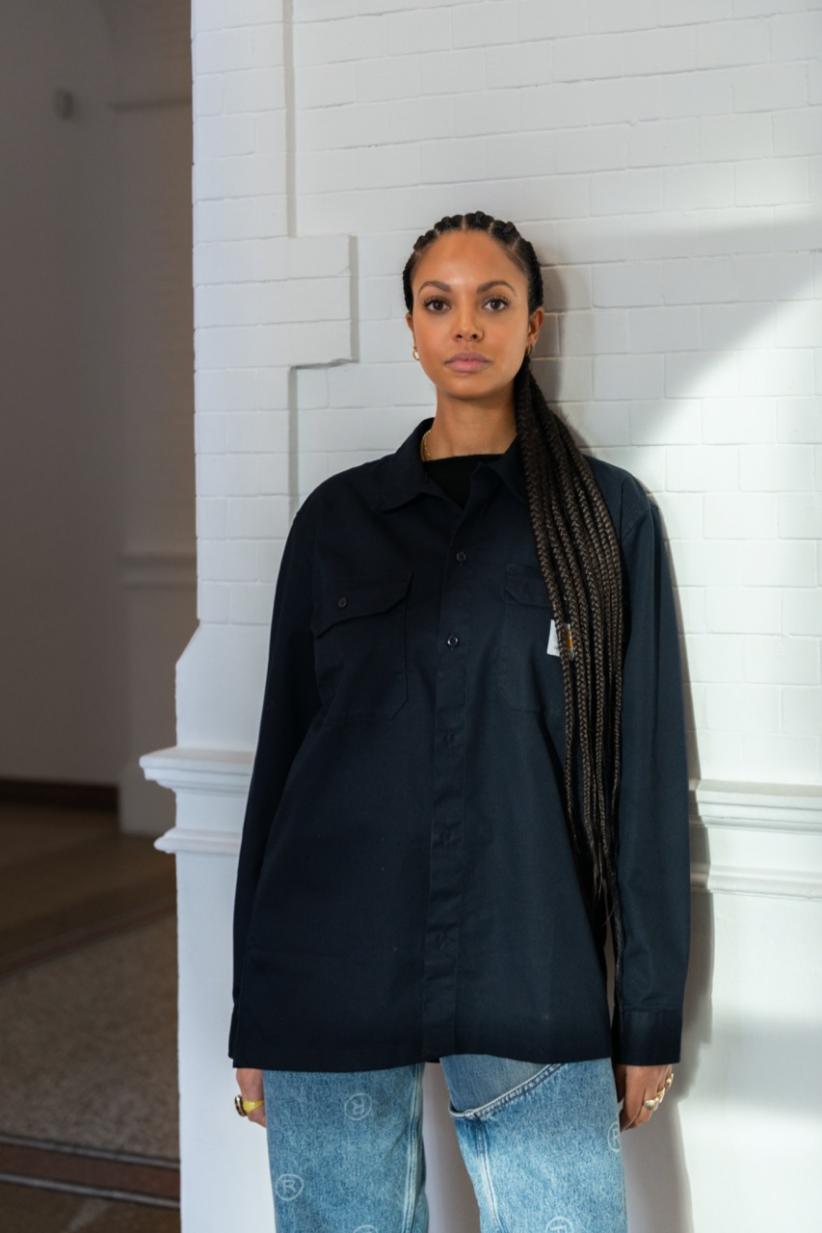
Rita Ouédraogo (moderator)
Rita Ouédraogo is involved as an external curator for the second edition of this three-part collaboration between Mu.ZEE and De Brakke Grond. In addition to her curatorial work, Ouédraogo is a researcher and writer, holding an MSc in Cultural Anthropology and Development Sociology from the University of Amsterdam.
Her practice is characterized by experimental and collaborative projects addressing themes such as archival practices, colonialism, institutional power, counterculture, and popular culture, always with a focus on social justice. Her projects and collaborations with individuals, collectives, initiatives, and institutions invite critical questioning and reflection. She has worked on a wide range of projects both within and outside institutional frameworks, with particular attention to increasing accessibility to (museum) collections.
Her research focuses on forms of collaboration and solidarity within contexts of power imbalance, often approached from a decolonial perspective.
Ouédraogo is co-founder and curator of Buro Stedelijk, the project space of the Stedelijk Museum Amsterdam. She previously worked at the Research Center for Material Culture as a Research & Community Officer and served as a curator at Framer Framed. She was also co-curator of the Hartwig Art Foundation Special Project (2020–2021). Currently, she serves as chair of the boards of the Mondriaan Fund and Kanaal40, an online and offline (micro)pop platform.
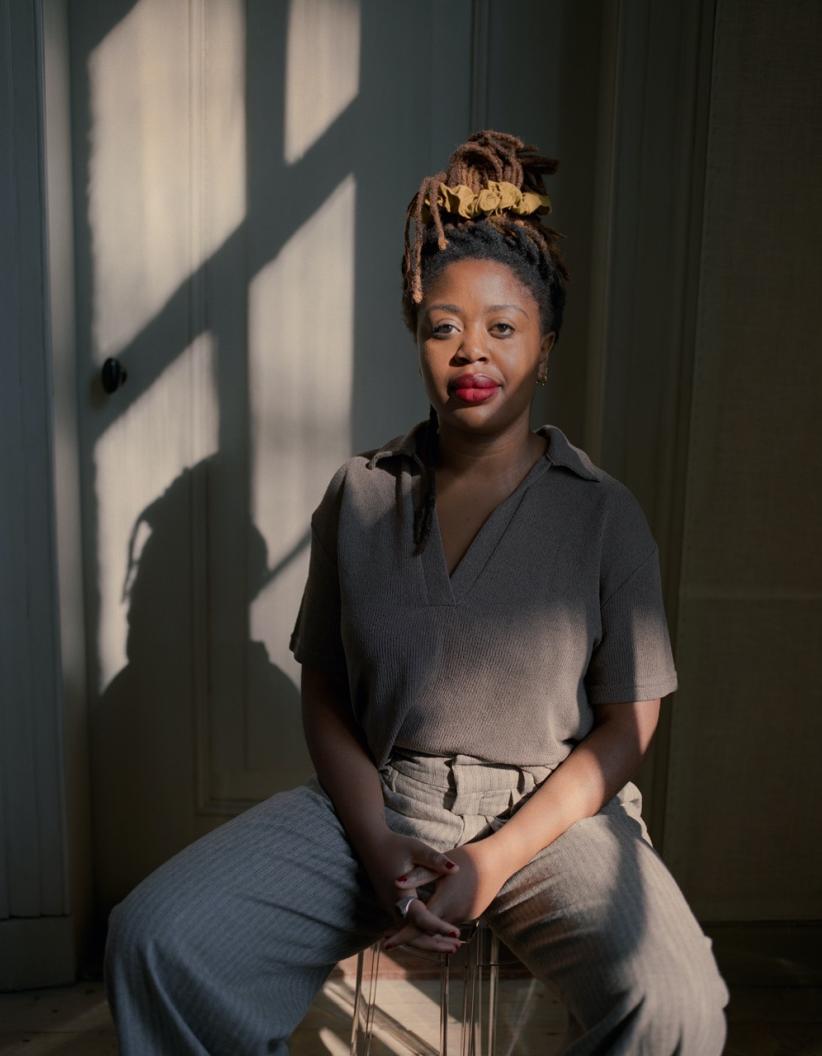
Babeth Fonchie Fotchind
Babeth Fonchie Fotchind is a poet and writer. She regularly performs at literary stages and festivals, and has published in, among others, Kluger Hans, De Revisor, De Groene Amsterdammer, DW B, De Gids, ELLE Magazine, and Lilith Mag. She was selected for the writing residency at deBuren and for the Slow Writing Lab of the Dutch Foundation for Literature. She was named a Next Talent To Watch by VOGUE, nominated for the Harper’s Bazaar Women of the Year Award, and recognized as a literary talent by de Volkskrant. Her poetry collection Plooi was published in June 2022 by Uitgeverij De Geus and received critical acclaim. She is currently working on her debut novel and a second poetry collection.