The program Sound focuses on the importance of music in diasporic contexts and explores the ways in which musical traditions transmit knowledge, memory, and culture. The program highlights not only how music can connect communities, but also how it can function as an instrument of resistance against dominant Western knowledge structures. Through sound, rhythm, and performance, genealogies and collective memories are passed on, creating space to experience cultural knowledge in non-linear and non-dominant ways.
Program:
15:00 | Screening Rumba Rules, New Genealogies van Sammy Baloji, David N. Bernatchez & Kiripi Katembo Siku
In this film screening, Sammy Baloji explores how musical traditions function as carriers of history, identity, and social connection. Rumba Rules, New Genealogies offers an audiovisual exploration of how rhythm and melody act as modes of transmission within diaspora communities. Rosa Spaliviero introduces the film and contextualizes its genealogical and cultural layers, guiding the audience both aesthetically and conceptually through themes of music, resistance, and memory.
16:30 | Musical Intermezzo by Pytshens Kambilo
Following the screening, the theme of Sound becomes tangible in a live performance by Pytshens Kambilo. His musical intermezzo connects the theoretical insights from the film and the reading group with a physical experience of rhythm, resonance, and performance. This moment invites the audience to listen, feel, and be present within the shared space of sound and movement.
17:00 | Panel Discussion: Music as Cultural Transmission and Resistance
The day concludes with a panel discussion moderated by Quinsy Gario, addressing the role of music as an instrument of knowledge transmission, cultural continuity, and resistance. With contributions from Pytshens Kambilo, Saddie Choua, and Rosa Spaliviero, the participants reflect on how sound, rhythm, and performance serve as means of preserving and transforming genealogies, collective memories, and identities. The panel invites the audience to ask questions and actively participate in the conversation on music, diaspora, and cultural resilience.
Reading Club:
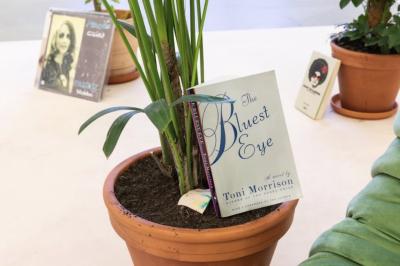
Before the Sound program, we are also hosting a book club & lunch with Saddie Choua. Together, we will read The Bluest Eye by Toni Morrison. This program starts at 11:00 AM and continues into the Sound program. Would you like to join us? Read more here.