Nagesprek op 8 oktober / Q&A on October 8th
Na de voorstelling op 8 oktober vindt een gratis nagesprek plaats tussen Ehsan Hemat en Lara van Lookeren van ons artistiek team.
After the performance on October 8th, there will be a free Q&A with Ehsan Hemat, moderated by Lara van Lookeren from our artistic team.
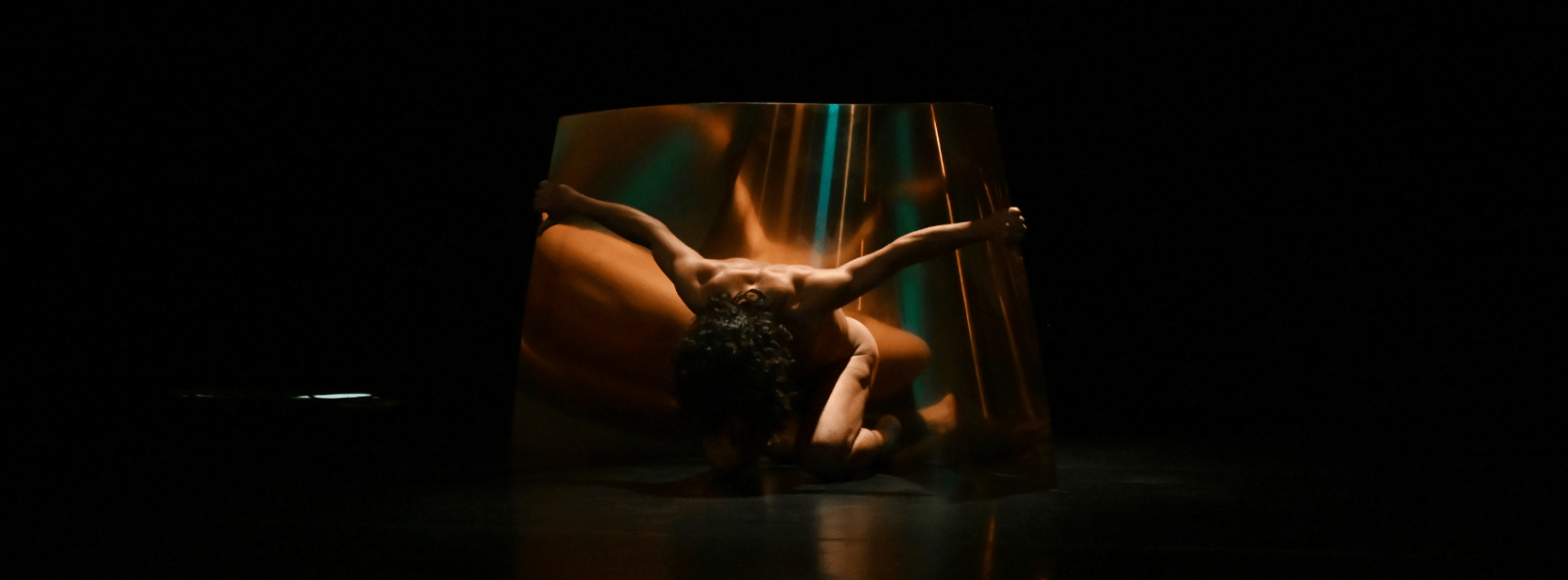
"Everything brings us back to the body", (Alles draait uiteindelijk om het lichaam) schrijft Achille Mbembe in zijn essay The Universal Right to Breathe uit 2020, als reactie op de eerste covid-lockdowns. Datzelfde jaar begon Ehsan Hemat aan zijn nieuwe voorstelling. Hierin onderzoekt hij wat het menselijk lichaam allemaal kan met een koperen plaat van 18 kilo. Geïnspireerd door de poëzie van Rumi en de Gaia-theorie experimenteert Ehsan met reflectie en echo. Het resultaat is een duet tussen het menselijke en het niet-menselijke als gelijkwaardige partners.
De voorstelling ontvouwt zich als een dialoog tussen het lichaam en de kern van de aarde, waarbij beweging, geluid en stem worden ingezet om zowel intimiteit als weerstand te verkennen. Onder de prachtige beelden zit een diepere boodschap: een confrontatie met een verleden van uitbuiting, ecologische ontwrichting en het universele recht om te ademen.
Achille Mbembe is een vooraanstaande Kameroense filosoof en historicus, bekend om zijn werk rond postkolonialisme en Afrikaanse filosofie. Zijn nadruk op de centrale rol van het lichaam tijdens de pandemie belicht de belichaamde ervaring van ziekte, isolatie en veerkracht.
Rumi was een 13e-eeuwse Perzische dichter, mysticus en theoloog, wiens werk thema’s als liefde, spiritualiteit en de onderlinge verbondenheid van alle wezens verkent.
De Gaia-theorie is een wetenschappelijke hypothese die de aarde beschouwt als een zelfregulerend systeem van levende organismen en hun fysieke omgeving.
Speciale avondrondleiding door de tentoonstelling Wayward Sanctuaries
Bezoek voorafgaand de tentoonstelling Wayward Sanctuaries met een kort flitsbezoek | 19:15 - 19:45 uur | gratis toegang
Ontdek de tentoonstelling Wayward Sanctuaries tijdens speciale rondleidingen! Tijdens een korte tour van 30 minuten maak je kennis met de tentoonstelling, waarna er nog ruimte is om zelf verder op ontdekking te gaan. Deze rondleiding is perfect te combineren met je bezoek aan de voorstelling. Interesse? Meld je hier aan.
Wayward Sanctuaries is een groepstentoonstelling waarbij kunstenaars op zoek gaan naar nieuwe manieren om een thuis te creëren. In een wereld vol verandering en onzekerheden bouwen ze via kunst, rituelen en spiritualiteit hun eigen plekken van verbinding, verzet en hoop. De tentoonstelling nodigt je uit om na te denken over gemeenschap, herinnering en de kracht van samen nieuwe werelden te verbeelden. Te zien t/m 25 oktober. Lees hier meer.